

Fields Brought Back From Brush and Saplings
Field & Pasture Clearing in Gluckstadt and surrounding areas for grazing land lost to brush and young trees
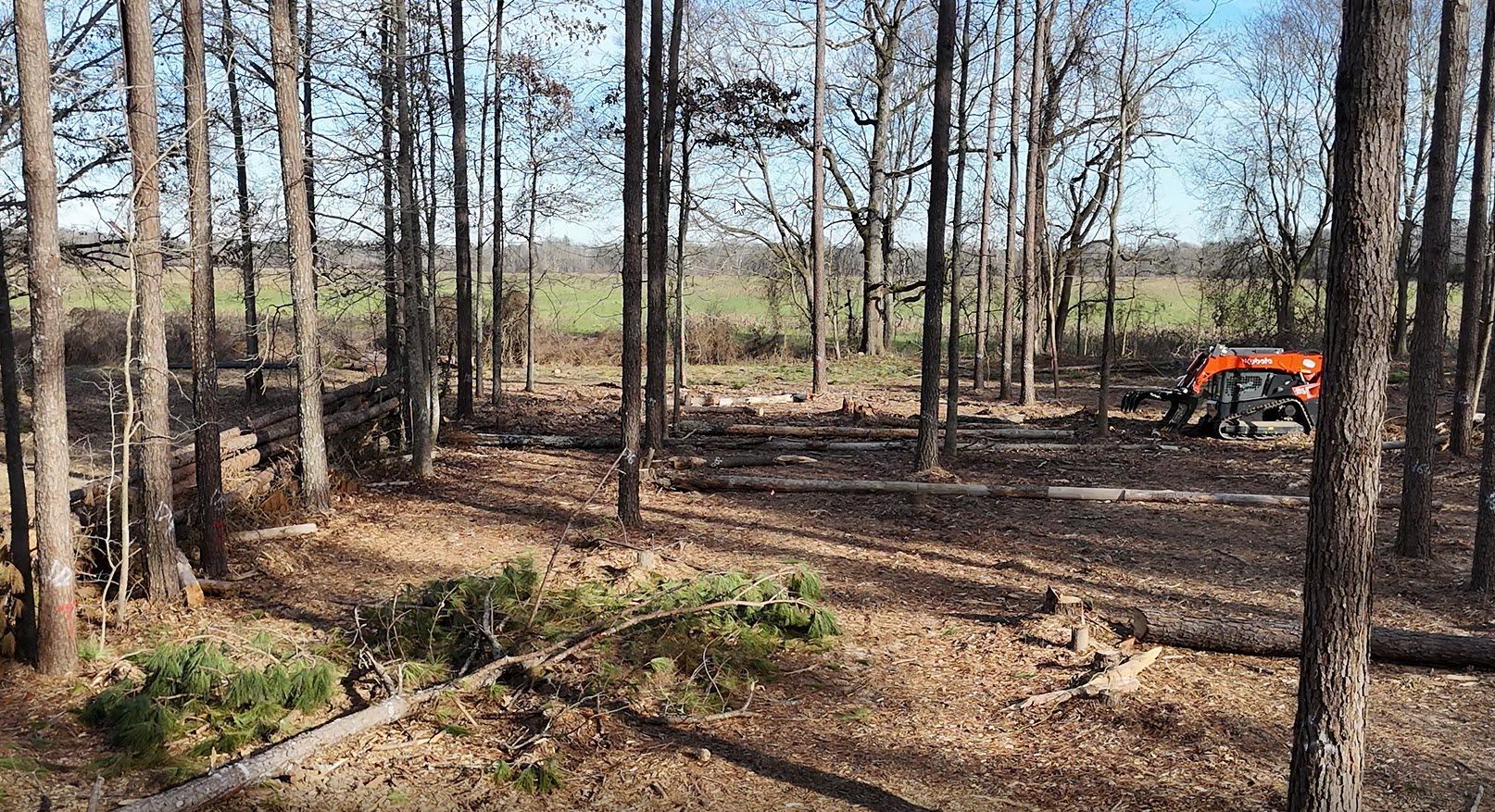
A pasture left ungrazed for a few seasons closes in from the edges, with sweet gum and pine saplings moving out from the tree line and privet filling the fence rows. Allman Contracting Services LLC reclaims that ground with forestry mulching, grinding brush and saplings up to 6 inches across into mulch where they stand. Around Gluckstadt, many of these fields are older farm tracts that changed hands as the area grew.
Greg walks the field with you to find the original fence lines, gates, and trees worth keeping for shade. The mulcher then works the overgrown areas in passes, and with no acreage limit, the process fits a few acres behind a house or a large hay or cattle tract.
Walk your field with Greg to plan where clearing starts and stops.
You regain the ability to mow, bush hog, or graze across the full width of the field instead of steering around thickets, and fence lines become reachable for repairs. Mulching in place also means debris is never dragged across ground you want to keep in grass.
After the work, you can see from one side of the field to the other and drive equipment along fence rows that were blocked. Thickets that hid holes, loose wire, or old equipment are gone, so the ground is safer to walk and run livestock on. Allman Contracting Services LLC leaves the cleared areas covered in mulch rather than bare, rutted dirt.
Trees larger than 6 inches are left standing for shade and shelter. Privet and sweet gum will try to resprout, so regular mowing or grazing, or a second mulching pass on new sprouts, keeps the field open.
Common Questions About Reclaiming Overgrown Fields
These answers cover what owners of older farm ground and inherited acreage ask before clearing starts.
What happens to the fence lines during clearing?
Fence rows are cleared up to the wire so the fence can be seen and repaired. Sections you plan to keep are flagged first, so the mulching head works alongside them rather than through them.
How does mulching compare to bush hogging for a neglected pasture?
A bush hog cuts grass and light brush but struggles with saplings and woody stems. A forestry mulcher grinds saplings up to 6 inches thick, so it handles growth that is past the bush hog stage.
Why do sweet gum saplings keep coming back in pastures?
Sweet gum spreads by seed and by root sprouts, so cut stems often send up new shoots. Mowing or grazing the cleared field regularly keeps those sprouts from becoming saplings again.
What should you check after a field is cleared?
Look for an even mulch layer, open fence rows, and the trees you flagged still standing. Walk the edges to confirm the tree line was pushed back to the boundary you agreed on.
How do older farm tracts around Gluckstadt change the clearing plan?
Older tracts often hide old wire, fence posts, and abandoned equipment in the brush, so those spots are walked and marked before the mulcher runs. That keeps buried metal out of the cutting head.
Allman Contracting Services LLC also performs field and pasture clearing in Madison, Canton, Ridgeland, Jackson, Flowood, Brandon and Clinton. Plan a field walk with Greg to set a clear boundary for what gets mulched and what stays.