

Overgrown Land Returned to Usable Condition
Forestry Mulching in Gluckstadt for properties where vegetation is cleared and returned to the soil as natural ground cover
Dense undergrowth blocks access to hunting property, fence lines, trails, and residential acreage, making it difficult to move across the land or maintain boundaries. Allman Contracting Services LLC uses forestry mulching to clear overgrown vegetation while grinding it into mulch that remains on site, reducing erosion and eliminating the need for hauling and burning piles of brush. The process works for residential lots, commercial developments, and large tracts where traditional clearing methods would leave behind debris that requires additional cleanup.
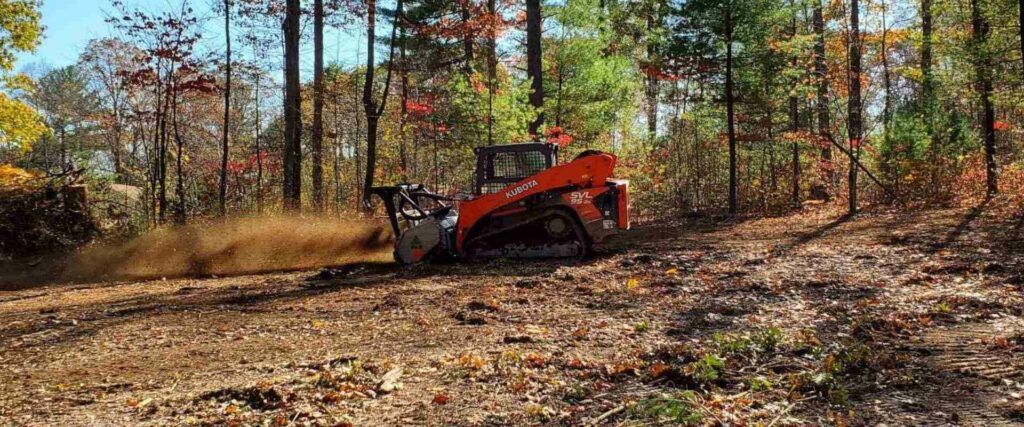
Forestry mulching grinds trees, brush, and undergrowth into small pieces that decompose and enrich the soil rather than leaving stumps, logs, and piles that attract pests or create fire hazards. The mulch layer protects exposed soil from rain impact, slows runoff on sloped ground, and suppresses new growth more effectively than bare dirt. This approach suits properties where the goal is creating trails, improving sightlines for hunting, clearing fence lines for maintenance access, or opening recreational space without stripping the land down to bare soil.
Request an estimate to discuss how forestry mulching can restore accessibility and manage vegetation on your property.
The ground shows a layer of shredded organic material instead of bare soil or debris piles, which keeps the surface stable during heavy rain and reduces the mud and washouts that appear when topsoil erodes. Trails remain passable after storms because the mulch absorbs water and prevents rutting, while cleared fence lines stay accessible without the regrowth that springs up quickly on bare ground exposed to full sunlight.
You regain visibility across hunting property without creating the wide-open appearance of scraped land, and fence lines become easy to inspect and repair without wrestling through thorny brush or clearing the same overgrowth every season. The mulch layer moderates soil temperature and moisture, which slows the aggressive regrowth common to Mississippi's humid climate where disturbed ground quickly fills with fast-growing saplings and invasive species. Commercial properties cleared with this method meet stormwater requirements more easily because the mulch reduces runoff velocity and filters sediment before it reaches drainage systems.
Forestry mulching handles mixed vegetation more efficiently than traditional clearing, processing everything from saplings to thick brush in one pass without separating material for burning or hauling. The method works well for perimeter clearing around structures, creating firebreaks, and maintaining power line corridors where repeated clearing is needed and minimizing soil disturbance reduces long-term maintenance.
Answers to Frequent Service Questions
Property owners considering forestry mulching often want to know how the process differs from other clearing methods and what results to expect.
What types of vegetation can forestry mulching handle?
The equipment processes trees up to a certain diameter, thick brush, saplings, and undergrowth, grinding everything into mulch without needing to separate material or create burn piles, though very large trees may require removal before mulching begins.
How does the mulch layer prevent erosion on sloped ground?
Shredded vegetation covers the soil surface and absorbs rain impact, slowing water movement downhill and allowing it to soak into the ground rather than running off and carrying topsoil with it, which is particularly important on properties in Gluckstadt where clay soils shed water quickly during heavy storms.
What happens to the mulch after it is applied?
The organic material decomposes gradually, adding nutrients to the soil and creating a barrier that suppresses weed and sapling growth for months or years depending on mulch depth, moisture, and sunlight exposure.
How does forestry mulching compare to traditional land clearing for hunting properties?
Mulching leaves a more natural appearance with selective clearing that improves sightlines and access without removing all cover, while traditional clearing creates wide-open areas that may eliminate the edge habitat and travel corridors deer and other game prefer.
What site conditions affect whether forestry mulching is appropriate?
Wet or soft ground may limit equipment access, very large trees may need separate removal, and properties with specific grading requirements for construction may need traditional clearing to achieve the necessary soil preparation, all of which are assessed during the estimate visit.
Allman Contracting Services LLC applies forestry mulching to residential acreage, commercial sites, hunting land, and trails where environmentally responsible vegetation management improves usability without creating erosion or cleanup challenges. Contact the company to arrange an estimate and review how mulching can address overgrowth on your property.