
Trees Removed Without Damaging What Surrounds Them
Tree Services in Gluckstadt for properties with hazardous trees, storm damage, or overgrowth that threatens structures and safety
Storm-damaged trees leaning toward buildings, dead trees with weakened trunks, and overgrown canopies rubbing against roofs create risks that worsen with each weather event. Every tree project managed by Allman Contracting Services LLC begins with an evaluation to determine the safest and most effective approach, examining tree condition, lean angle, proximity to structures, power lines, and other obstacles that affect how the work should proceed. Professional tree removal, trimming, and hazardous tree management protect surrounding property while eliminating threats that could result in roof damage, blocked access, or injury during the next windstorm.
Tree services address removal of trees too close to foundations, trimming that reduces wind resistance and prevents branch contact with structures, and clearing storm-damaged trees before they fall unpredictably. Safe work practices include rigging systems to control how sections are lowered, directional cuts that influence fall patterns, and equipment positioning that keeps falling debris away from buildings, vehicles, and landscaping. The evaluation process identifies which trees can be felled in one piece and which require sectional dismantling from the top down to avoid collateral damage.
Schedule an estimate to review tree hazards on your property and receive a plan for removal or trimming that prioritizes safety and protection of surrounding structures.
The project begins with an assessment of tree health, structural stability, and surrounding obstacles, which determines whether the tree can be dropped in a controlled direction or needs to be dismantled piece by piece using climbing techniques and rigging. Dead or weakened trees exhibit visible signs like missing bark, hollow trunks, fungal growth at the base, or branches that snap easily, all of which indicate the tree could fail without warning during high winds or heavy ice.
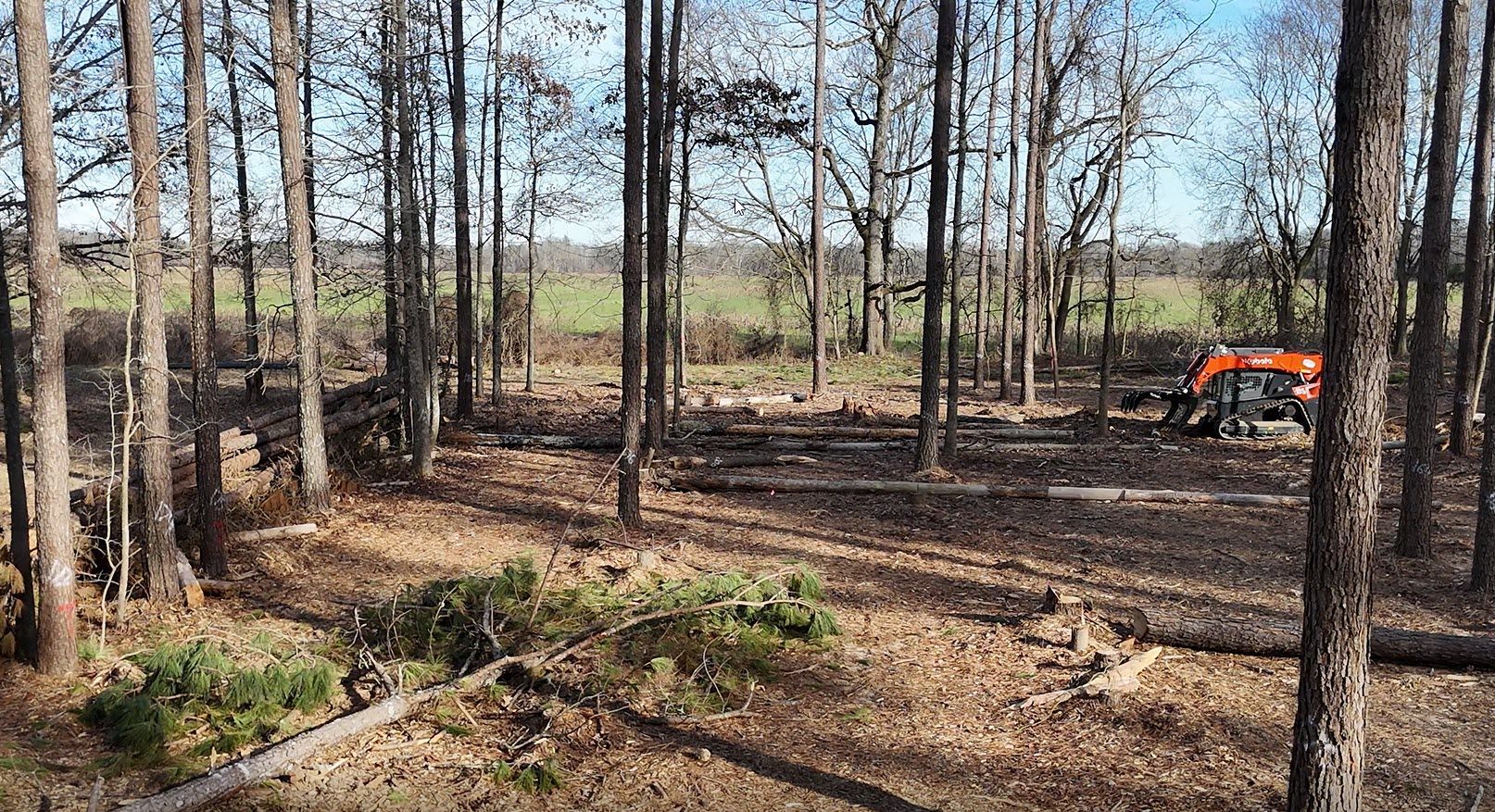
After removal or trimming, you see cleared space where hazardous trees stood, improved sightlines across the property, and elimination of branches that previously scraped siding or deposited leaves in gutters. Structures remain undamaged because falling sections are guided away from roofs, fences, and driveways using ropes and pulleys that prevent uncontrolled drops. Trimming services reduce canopy weight and wind resistance, which lowers the risk of limb failure during storms and prevents ongoing damage to shingles from rubbing contact.
Safe tree work requires evaluating factors like trunk diameter, height, lean, and rot, all of which affect cutting techniques and rigging requirements. Trees leaning toward structures cannot be safely dropped in their natural direction of lean, requiring either sectional removal or mechanical assistance to redirect the fall path away from buildings.
Common Questions About This Service
Tree removal and trimming questions often focus on safety measures, project planning, and what happens during the work.
What happens during the evaluation before tree work begins?
The assessment examines tree health, lean, proximity to structures and power lines, ground conditions that affect equipment placement, and obstacles that influence how sections should be lowered, all of which determine the safest approach and equipment needed for the project.
How are trees removed when they are too close to buildings to fall safely?
Sectional dismantling involves climbing the tree and cutting it into manageable pieces starting from the top, with each section rigged and lowered using ropes to control descent and prevent impact damage to structures, landscaping, or vehicles below.
What visible signs indicate a tree has become hazardous?
Missing or peeling bark, hollow-sounding trunks, mushrooms or fungal growth at the base, dead branches in the canopy, cracks in the trunk, and pronounced lean all suggest structural weakness that increases the risk of failure during windstorms common to Gluckstadt during spring and summer storm seasons.
What gets removed during tree trimming versus full removal?
Trimming removes specific branches to reduce weight, eliminate rubbing contact with structures, clear power line corridors, or improve canopy shape, while full removal takes the entire tree down to ground level, leaving only the stump unless grinding is also requested.
How does storm damage affect the tree removal process?
Damaged trees under tension from being partially uprooted or caught in other trees are unpredictable and require specialized rigging and cutting techniques to release stored energy safely without sudden movement that could injure workers or damage property.
Allman Contracting Services LLC evaluates every tree project to protect surrounding structures and ensure safe removal or trimming that eliminates hazards without creating additional risks. Arrange an estimate to assess tree concerns on your property and discuss the most effective approach.